When this is the right conversation
You cannot trace an executive metric back to its source, identify where a customer field travels, or locate the current owner of a dataset.
What the work involves
- Select a set of high-value assets and agree the inventory fields and classification vocabulary.
- Map systems, key transformations and external dependencies using approved documentation and access.
- Separate observed lineage from stakeholder-reported links and unresolved assumptions.
- Create an update process so ownership changes and new integrations do not immediately make the inventory stale.
What we need from your team
Approved system documentation, a technical contact and a business steward. Tool integrations are selected only after access and scope are agreed.
What useful completion looks like
For each scoped asset, a reviewer can find its purpose, source, owner, known destinations and the date its metadata was checked.
No universal discovery promise. Coverage is explicitly limited to the systems, assets and evidence included in the engagement.
Before we begin
We agree the business objective, named delivery roles, access arrangements, fee, timetable and acceptance criteria in a written scope. Dependencies and out-of-scope work stay visible. We do not assume permission to change production systems or transfer sensitive information.
See the engagement processRelated field notes
Your first 90 days of data governance
Trace one board-report number back to the record.
Begin with a single important output, not an ambition to catalogue everything. Trace the report to its model, its transformations and its source fields. Record filters, joins, time windows and manual adjustments. Mark unverified links as questions. The result should explain both where a number came from and where a source change might matter.
Illustrative scenario, not a client case study or a claim of past results.
The working evidence
- Critical asset registerAsset identity, purpose, owner, sensitivity and known destinations.
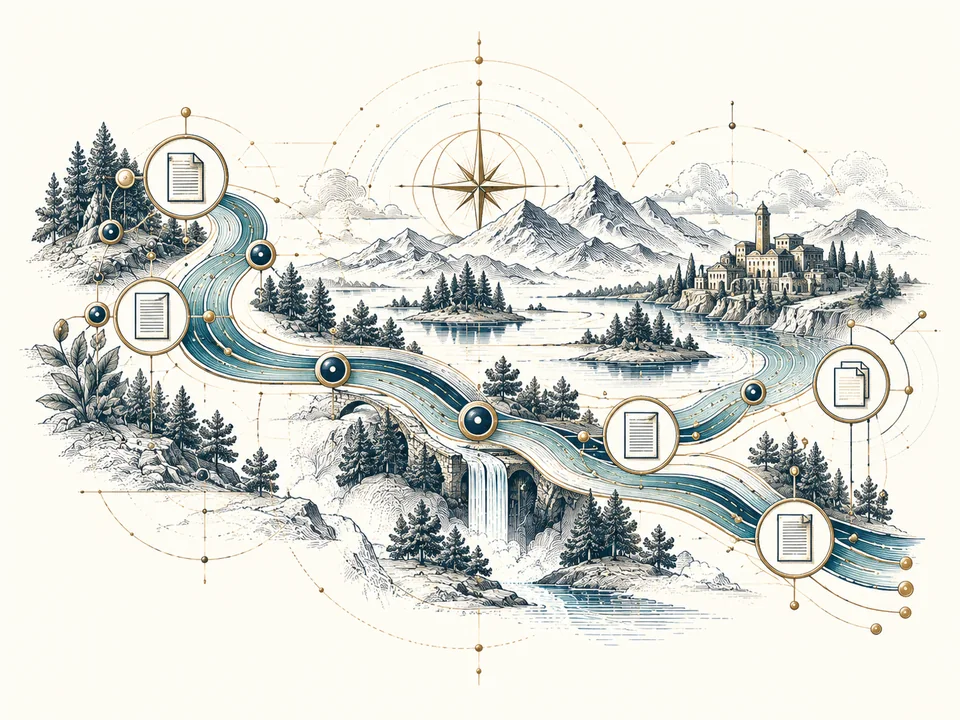
- Scoped lineage mapSource → transformation → output, including manual handoffs.
- Transformation notesRelevant field mappings, filters, reporting windows and version references.
- Change-impact listWhich reports, controls and owners need review if an input changes.
Who does what
Report users explain the decision. Source owners explain meaning and permitted use. Custodians validate the technical path using approved access. A steward maintains the business-facing map and open questions.
Select an output and explain its source, transformations, reporting period and owner. Then change a definition in a test scenario and identify the affected downstream uses without treating every connection as automatically broken.
A diagram is not evidence of complete automated lineage. Application permissions, undocumented spreadsheets, inaccessible supplier systems and derived copies must be recorded as limitations.
Make the first workshop useful.
Bring roles, questions and approved examples—not an unrestricted data export.
- Which report or workflow should the first trace explain?
- Which source, transformation and destination owners can confirm the links?
- Which missing or inaccessible connections must remain explicitly unverified?